
How Ravenna uses Langfuse to build and debug AI agents for enterprise internal support
Learn how Ravenna uses Langfuse for end-to-end observability and evals across their AI-native internal service desk, enabling engineers and CS teams to debug agentic workflows orders of magnitude faster.
 Felix
Felix Annabell
Preface
When someone at Langfuse has an IT Support request, they head to the #it-support channel, formulate their request and get immediate help. Help powered by Ravenna’s IT support automation agents. And Ravenna's agents run reliably because Ravenna runs on Langfuse.
About Ravenna
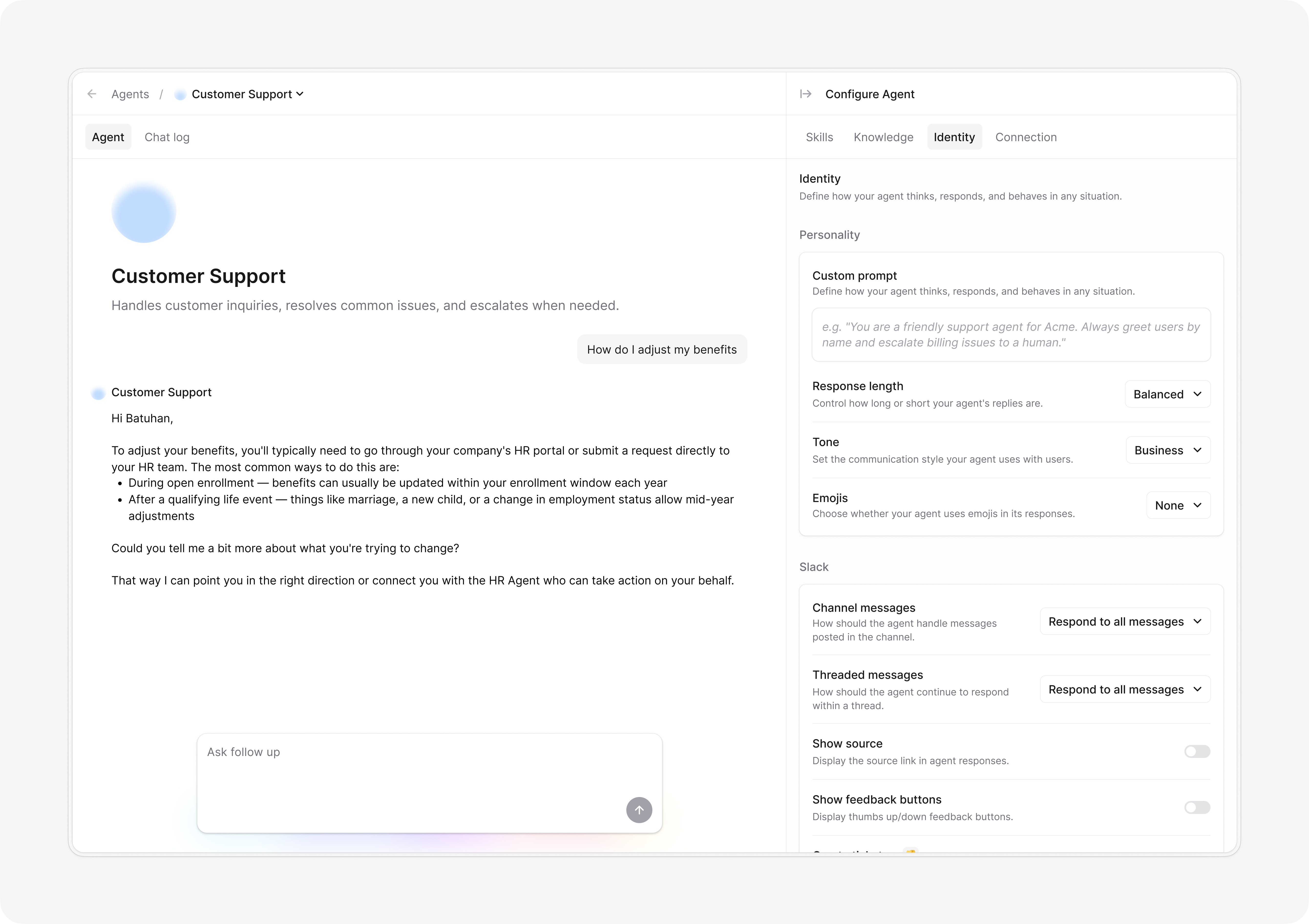
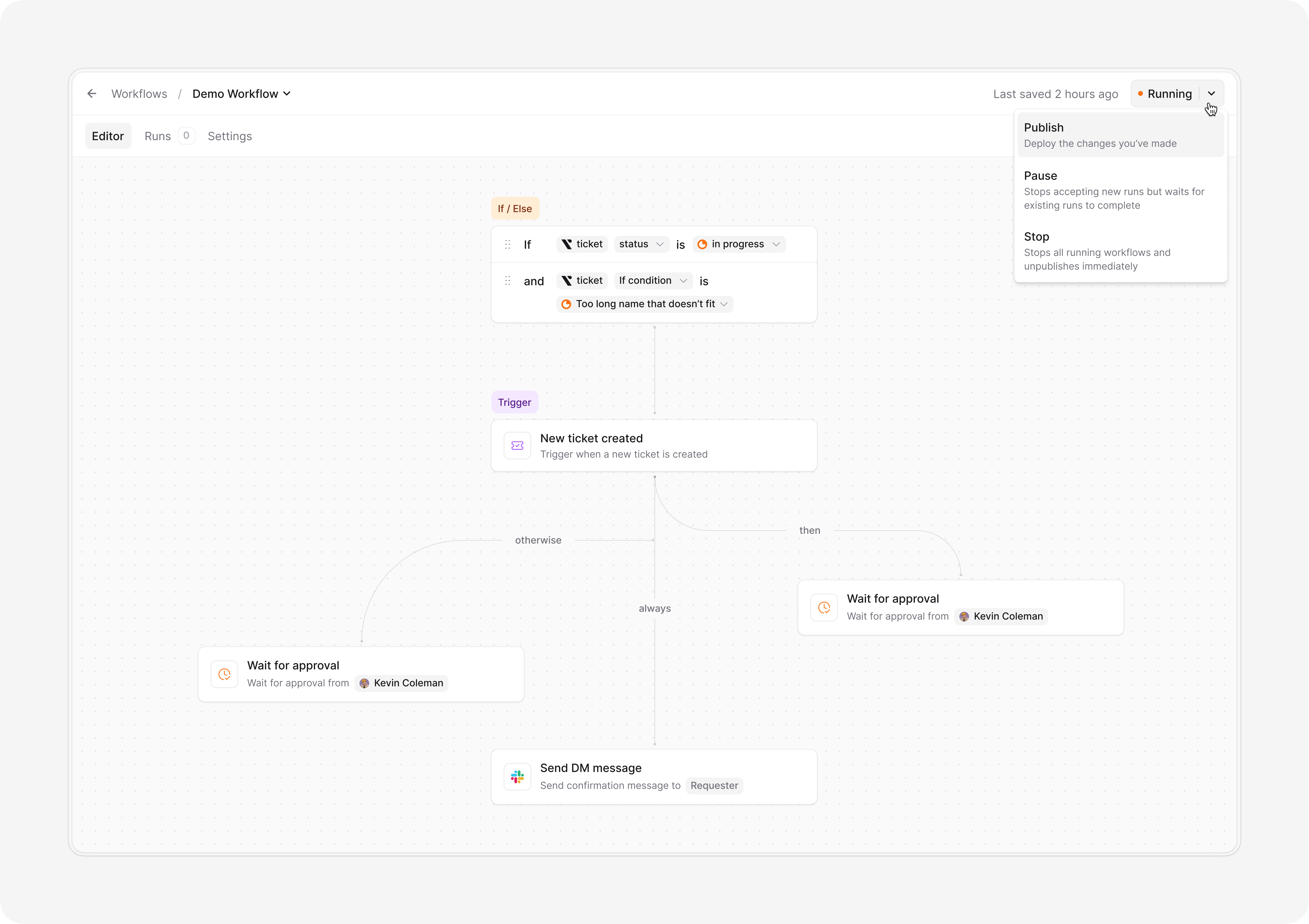
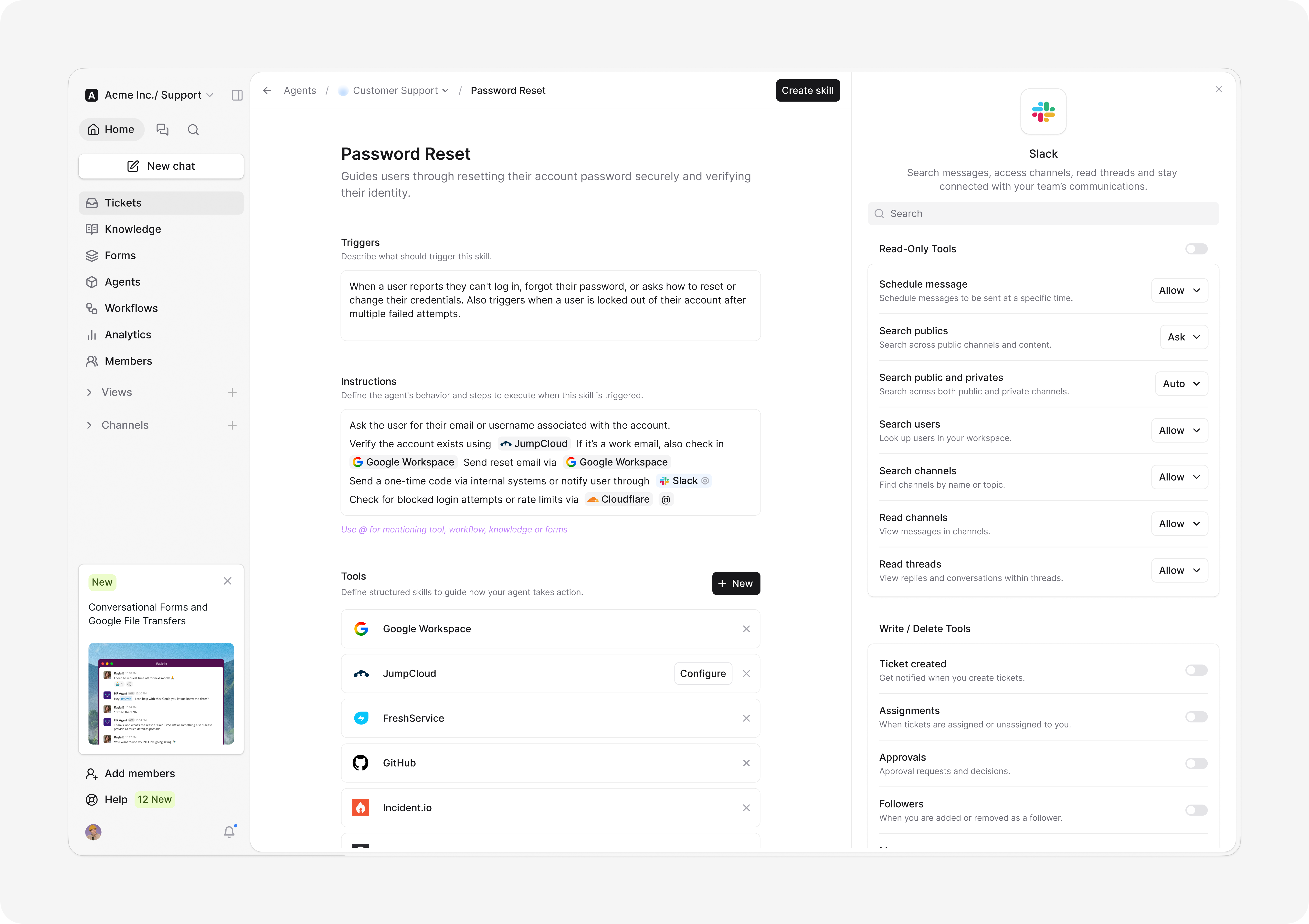
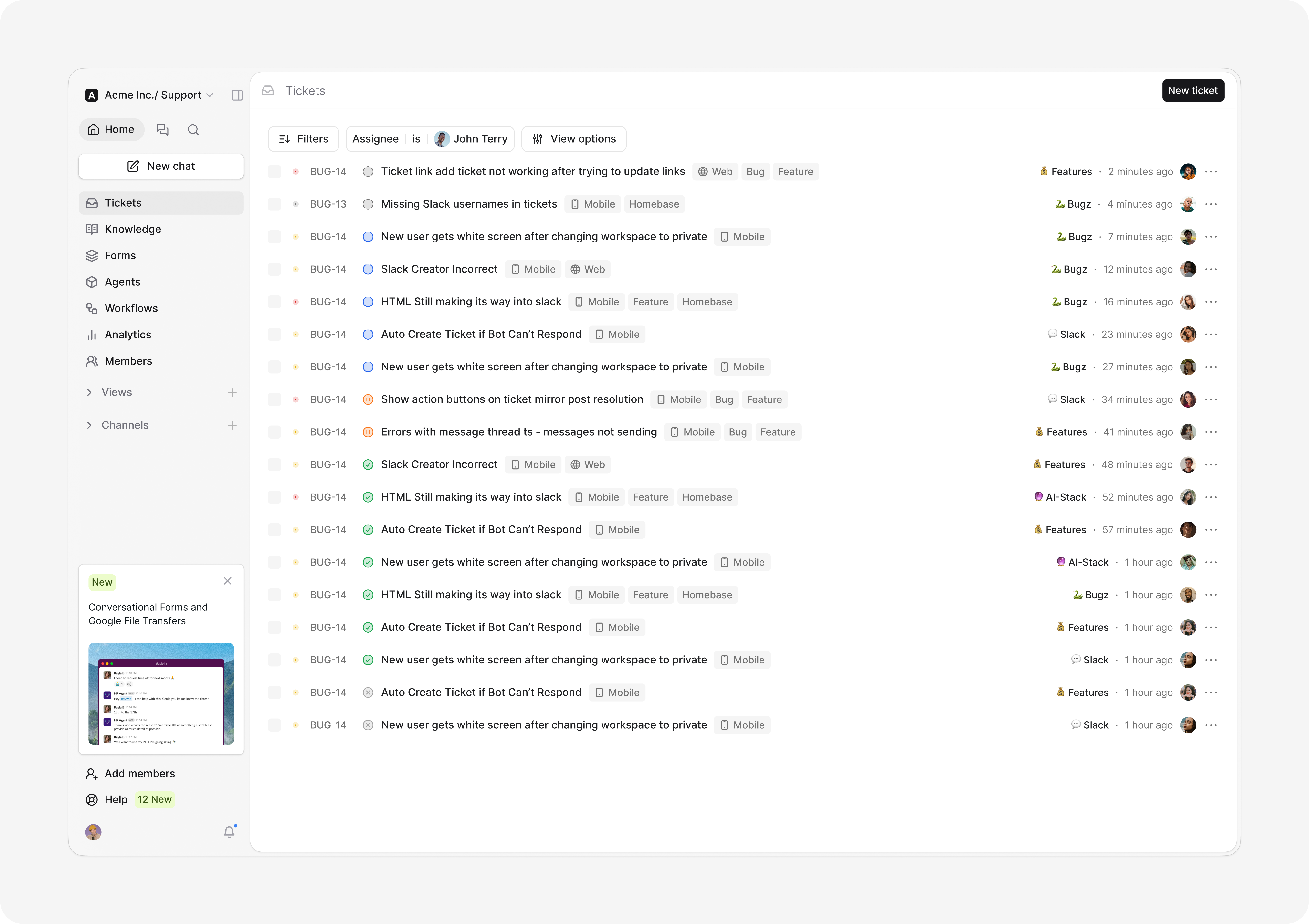
Ravenna builds an AI-native internal service desk where human agents and AI agents collaborate on employee support tickets. IT, HR, and revenue operations teams can use Ravenna to build agents that automate their work. The platform lives primarily in Slack and includes a full-stack ticketing system, an automation engine integrated with core business systems, and a reporting suite.
Ravenna challenges incumbents like ServiceNow, Jira Service Management, and Freshservice. The difference: Ravenna built the entire platform AI-first from the ground up rather than bolting AI onto legacy software. Agents are first-class citizens of the architecture, not add-ons.
From RAG chatbot to agentic platform
When Ravenna started in 2024, customer expectations were simple: hook into a knowledge base and answer questions in Slack.
That changed fast. By 2026, customers had seen what Claude, Perplexity, and computer-use agents could do. The expectation changed from simple replies that might describe how to go about something to agents that take that very action for you, ideally in seconds, ideally without mistakes. People want their access permissions handled, to order new IT devices, or (a very popular one in the Langfuse team) get an email alias provisioned.
Ravenna now offers agents that meet those expectations. They handle conversational form filling with disambiguation logic ("there are 52 Johns, which one?"), and even generate integrations from API docs on the fly through a tool called Foundry. A key ingredient to get there was to get deep insights into what their agents are doing, which tools they are using and which challenges they have to solve. Something that was possible by integrating Langfuse from day 1.
Why Langfuse was adopted from day one
Taylor Halliday, Ravenna's co-founder and CEO, was previously Director of AI Engineering at Zapier and had a clear conviction going in: the core principles of good software engineering, test-driven development and observability, got somehow abandoned when AI arrived. Everyone was vibing their way to production. Something that was not an option for him when building Ravenna.
There was no "we tried building internal tools first" phase. Langfuse was chosen before the first agent shipped because building Ravenna without LLM observability would have been impossible. When your agents handle sensitive enterprise workflows across IT, HR, and operations, face new contexts, policies and integrations in every company, you need to see exactly what they are doing and why.
Why Ravenna chose Langfuse specifically:
- Open source with a path to self-hosting. Ravenna handles sensitive enterprise data and hooks into customers' core business systems. While the team is running on Langfuse Cloud, the ability to eventually deploy Langfuse in customer VPCs was a key factor.
- Clean, well-built product. No friction, no annoyances.
- Right price point. Appropriately priced for a growing startup shipping fast.
How Ravenna uses Langfuse
Tracing is everything
Every AI interaction in Ravenna links directly to a Langfuse trace. The team built deep links into both the web app and Slack messages: one click from any agent response takes you straight to the full trace inside Langfuse.
A typical trace spans multiple systems: a TypeScript API service makes requests to a Python AI stack, which interacts with Slack or the webapp. Langfuse ties together the full trajectory of an agentic request: reasoning steps, tool calls, prompt and response pairs, and metadata about the user and context.
Langfuse is used by all of Ravenna's AI engineers as well as the forward-deployed customer success team. Everyone technical is in Langfuse daily.
"Building a product like ours would be impossible without Langfuse. Our agents handle hundreds of different systems and request types across different companies. Knowing what they do and knowing if it is going well is irreplaceable.

A workflow of continuous iteration
The team runs the kind of tight loop Langfuse Academy walks through: ship or update an agent, trace all its actions in Langfuse, and then monitor how their agents behave in production. One of the key indicators for them is resolution of requests and customer feedback. If a human has to intervene unplanned, this is a clear signal that this execution is worth a closer look.
By evaluating for behavior like this, both the engineering team as well as CS know when to look where. The CS team can triage and diagnose issues independently. They do not need to pull engineers in for every customer report. They spot the problem in the trace, document it, and hand it off with full context.
The engineering team can then systematically work on these problems, to continuously improve agent performance for Ravenna's customers.
Impact
Orders-of-magnitude faster debugging
Traces stitch TypeScript, Python, Slack, and the web app into one request lineage, so debugging a misbehaving agent is one click away.
CS teams self-serve on diagnostics
The forward-deployed CS team triages issues from traces without pulling engineers into every customer report.
Mission-critical infrastructure
For their business, Kevin Coleman puts Langfuse in the same category as CRM and Slack: foundational software you build your company around, not peripheral tooling you swap in and out.
"It's probably multiple orders of magnitude faster than it would be without a tool like this.

"In an AI world, this class of tool is absolutely one of those core, foundational pieces of software. It's mission-critical. And of all the problems you have in a software company, Langfuse has never been one of them. It just works.
Ready to get started with Langfuse?
Join thousands of teams building better LLM applications with Langfuse's open-source observability platform.
No credit card required · Free tier available · Self-hosting option